Tuesday, December 30, 2008

It's not easy being Green

That was perhaps an overly lengthy holiday break - back to posting, now.

In the last election, the Green Party earned over ten percent of the vote in forty ridings. That's a pretty impressive take for a party with no seats; moreover, they are distributed across the country:
These Green ridings are heavily distributed in big urban areas, unsurprisingly - Calgary, Toronto, and Vancouver all feature prominently. Perhaps more surprisingly are the overall winners in these ridings; many of them feature a Conservative MP, and some (likely the Calgary ridings, or Stockwell Day's Okanagan-Coquihalla) are the safest Conservative seats of all:
Almost three-quarters of that pie (29 ridings out of 40) is blue; clearly, the Green party is flourishing in righty ridings. Some (like my blogging comrade Allan) would suggest that this is because the Green party is "stealing" or splitting the vote in a Naderesque fashion, but consider the following histogram for the margin of the Conservative victory in those ridings:
This graph shows just how well the Green Party does in Conservative-heavy ridings; in the average riding where the Green Party won more than 10% of the vote but the Conservatives won overall, the margin by which the Conservative Party won was more than 30% of the total vote. In Calgary Southeast and Wild Rose, the Green Party placed second while the Conservatives picked up over 70% of the total vote.

In these 29 ridings, a (very unlikely) total shift of Green vote to the second-place party would lead to only two ridings changing parties - both Kitchener-Waterloo and Saanich-Gulf Islands would have gone Liberal under these circumstances. Under these circumstances, it is ludicrous to accuse the Green Party of "splitting the left vote" - generally, the Greens do well in ridings in which there is not a huge left vote there to split.

Why is the Green Party doing its best in very Conservative ridings? It seems likely that, in such ridings, voters recognized the inevitability of a Conservative win, and responded accordingly, through one of the two following actions:
  1. Voters did not vote strategically in these ridings, and instead voted for their favoured party, and this meant a very large Green share. This seems unlikely, as it would imply a far greater preference for the Green Party than was relected in polls, but it could be that sites like VoteForEnvironment really did help the Liberals significantly.
  2. Liberal voters in these ridings were demoralized by their party's poor standing in polls and did not bother to come out and vote, while Green supporters all voted anyway (as they never expected their party to win). This seems far more likely; in the heaviest Conservative ridings (with a share of over 70% for the Conservatives) the voter turnout averaged a dismal 40.2%, far lower than the Canadian average of 59.1%. (In Medicine Hat, barely one-third of voters turned out to vote, which is a bleak statement about Canadian democracy.)
This points to a deficit in get-out-the-vote operations by the Liberal Party, and a general enthusiasm gap. Hopefully this was just a one-election type thing, but what should the party be doing to attract voters in an increasingly Conservative-dominated political culture?

Tuesday, December 23, 2008

To beat the house, you've got to stack the deck.

In case you have yet to hear, the Upper House (Senate) is once again full. Full of senators that is. (I'm sure it's been full of certain other things fairly reliably since confederation.) Harper of course said he would not appoint senators, and he has now appointed a total of 20. (That is, 18 just now to make sure they go Conservative, 1 when elected to have a representative from Montreal (to pander), and one 'elected' from Alberta.) So I though I'd say a few words about senate reform.

There have been many attempts to and suggestions on Senate reform in this country. Under Trudeau (is there anything he didn't do?) there was a proposition to turn the Senate into a 'House of the Federation'. This would have been appointed half by the federal government, and half by the provincial governments. It would have increased the representation of BC, Alberta, Saskatchewan, Manitoba and Newfoundland. (The last three are questionable as all three provinces are already incredibly overrepresented compared to the 4 larger provinces.) This house would also have been given the power to veto legislation for 60 days, or permanently if it was of linguistic relevance and a majority of both English and French senators voted to veto. (What about people who speak both or neither at home?) At the time, many other groups came out with their own ideas. Most of which turned the Senate into a provincial hand in the federal affairs of the country where the members would be appointed by the provincial legislatures, and vote as a block. In the end nothing happened as Ottawa and the provinces could not agree, and there were more important things on the table.


How things are now.


Later, in and around the early 80s, Senate reform resurfaced, especially in Western Canada. Much of the problem was that BC and to a lesser extent Alberta were underrepresented compared to Quebec and to a lesser extent Ontario. (It should be noted that Quebec and even more so Ontario are just as underrepresented with respect to the 6 smaller provinces.) The battle cry was condensed around the three 'E's:

Equal: More equal distribution across provinces (here meaning each province gets the same, also know as less equal)

Elected: The Senate should be democratic (cause they don't cost enough as is)

Effective: The Senate should do more then it does (now that we have computers to do the spell checking)

limitEd: Senators should not be allowed to stay until age 75 (this isn't one of the three, but usually goes hand in hand)

This became the favoured model in the west, and a battle cry in Alberta. Alberta's specifically favoured plan (as of 1985 and 2003) involved every province having 6 seats (2 per territory) elected from each province/territory as a whole under a multiple-member system. This Senate would have a delay veto (as above, but longer), and the ability to ratify non-military international treaties. The senate would still not be able to topple to government.


The Three E Plan (Tall lines are bad.)


Under the Progressive Conservatives the Meech Lake and Charlottetown Accords contained some Senate reform. Meech Lake would have forced the Senate appointees to come from lists put forward by the provinces. The Charlottetown Accords would have given each province 6 seats (1 per territory) to fill either by election or appointment, and also have given the Senate the language veto of Trudeau, the ability to delay money bills by 30 days, and force other bills into having to pass a vote in the combined houses. In the end, both accords dies for other reasons.

In the last few years Harper has latched onto the issue, specifically the democratic nature of the senate, and limited terms for its members. The big problem he doesn't talk about is that changing the Senate is for the most part a Constitutional thing, and thus requires consent from the House of Commons, the Senate, the GG, and two thirds of the provinces representing at least half of all Canadians. Harper likes to say that it has been the Senate that has so far stood in his way, but he has of course not had a majority in the House of Commons either, and the provinces have yet to agree to anything. In fact, Harper has tried to craft his Senate changes so as not to need provincial assent, but 4 of the provinces constituting 66% of Canadians (ON, QC, NB, and NL) have said that these changes must have provincial consent (meaning they likely don't agree with him, and in truth, the constitution agrees with the provinces on this one). This of course hasn't stopped him from tabling motions to limit terms to 8 years (was S-4, then C-19 this fall) and force provincial consultation on appointments (was C-43 then C-20 this fall). Neither had passed by this fall's election, and to my knowledge neither has been reincarnated since the economic crisis.


How I would do it. (Give 15 to ON, 7 to BC, 5 to AB, 2 to NL, MB, SK; new total: 138)


Personally, I agree that the Senate should be reformed somehow. That said the '3' 'E's are not the way to go. By giving each province an equal number of seats you severely disenfranchise the big provinces. I support the idea of it not being directly proportional so as to help the smaller provinces have their own voices, but Ontario and Quebec make up 61% of this country, and so they should get more seats than the west or the east. I also consider the idea to be a power grab on behalf of the Conservatives. If each province were given 6 seats, the Conservative friendly western provinces would lose no seats, while the more Conservative poor regions would loose 42 seats (taking into account a gain of 2 for PEI). Under this system there could be a Conservative Senate majority with just 33% of Canadians given a strong showing in the West. This is only intensified if the Senate becomes elected. At the moment, the Senate does little aside from minor amendments and thorough second readings of legislation (hence being called the body of "sober second thought"). If the senate were to become elected, I'm sure it would begin to wield its almost House of Commons like power. If this were to happen and the senate were not at least mostly proportional to population then we would no longer be even as democratic as we currently are. That said, if it were elected on a proportional basis, why bother having it, as it would just be a second House of Commons.

Why not limit their power (so that they can't impinge on the democratic House) throw a few extra seats at the 6 most western provinces, and then let the provinces decide for themselves how their seats are filled. In the end, they would likely end up elected anyway. The one problem with this is that in the even of provincial appointments, what party would the appointees represent federally? The provincial parties and federal parties in this country do not parallel well. The PQ and Bloc may agree, as likely do the Alberta PC's and the federal Conservatives, but the PEI PC party is nothing like the federal Conservatives, the Quebec Liberals do not necessarily get along with the federal Liberals (their leader was a PC), and the Saskatchewan Party has no federal analogue (the list continues, I do not).

In the end though, it seams Harper has decided that he wants what he wants, and he will violate his earlier principles to do it. While I don't fault the guy as a politician for doing it, doing it for reform is not really as necessary as it sounds. There was at least some senate support for the Murray-Austin amendment (fairly large reform proposal) in 2006, and in the 2004 election all 4 parties supported change to the Senate. I'm sure even today support could be found for a reasonable proposal amongst Ignatieff's Liberals. Besides, Harper himself said that if he could not get reform passed, he would like to see the Senate abolished, a position supported by both the NDP and the Bloc. So while the appointments can't hurt, I suspect this is more of a political smoke screen, hence the phrase: "If Senate vacancies are to be filled, however, they should be filled by the government that Canadians elected rather than by a coalition that no one voted for". (Which is of course politically charged and wrong, as the coalition is just as elected as they are.) It would have, of course, been political suicide to have let the appointments pass, risking more non-Conservative appointments. That said, Mr. Martin appointed at least two senators who identified as PC, not Liberal.

In the end this isn't so bad though.
If you don't trust him or his party, take heart that even after these 18 appointments the senate will be: 38 Conservative, 58 Liberal, 3 PC, 6 independent (or other). Even with 8 Liberal senators leaving in the next year, there will still be more Liberals than Conservatives.
If you do trust him, and were committed to reform, this is probably a good thing, so be happy. Besides, many of the appointments weren't so bad.
However, if you were hoping he would finally keep one of his silly promises long enough to be hung with it, be disappointed that once again he has chosen politics over ideology. Because in the end, that is how you beat the House.

Saturday, December 20, 2008

Counts

Ignatieff is descended from a Russian count. How awesome is that? This is the first time I can remember that any party has had a leader who was only a couple generations removed from nobility - and what sounds more vaguely ominous than a Russian count? Anyway, I've rounded up a series of other counts, and compared their viability as Liberal leader to Ignatieff's, on the following scales:

Leadership: Is this someone who acts like a Prime Minister? /10
Liberal cred: Does this count have policies or branding similar to the Liberal Party? /10
Diversity: How excitingly multicultural is the count? /5

Dracula
This count is a Romanian vampire noted for owning a large castle, shapeshifting, and drinking the blood of young Victorian-era Englishwomen.
Leadership: 0/10 for his lack of interest in gaining allies, dealing with the media, or terrorizing innocent villagers.
Liberal cred: 0/10 because anyone who feasts on the blood of mortals already has a natural home elsewhere in Canadian politics.
Diversity: 3/5 because vampires are definitely a traditionally underrepresented minority.

Monte Cristo
This count is a French sailor who digs up hidden treasure accrues fame and fortune on his obsessive search for revenge.
Leadership: 6/10 for an impressive ability to win friends and influence people.
Liberal cred: 1/10 His enthusiastic spending would provide much-needed economic stimulus. However, his only policy seems to be vengeance, which isn't quite in sync with the Grits right now.
Diversity: 0/5 Another priveleged Francophone? Nothing terribly exciting.

Dooku
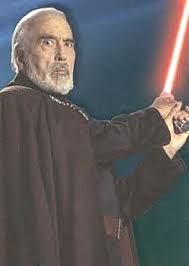
This count is an Old Republic noble with a distaste for red tape, Jedi training, and an unfortunate enthusiasm for the Dark Side.
Leadership: 4/10 for his evident skill at parliamentary maneuvering and his dislike for bureaucracy.
Liberal cred: 2/10 because he has a red lightsabre and that is the official Liberal colour. However, his eagerness to remove the Chancellor and install his preferred replacement to lead an intrusive government makes it seem like he'd be more at home elsewhere.
Diversity: 2/5 because he is Sith and therefore would be the first non-Christian Liberal leader.

von Count
This count, along with his friends and colleagues, raised me and was partially responsible for my mathematical inclinations.
Leadership: 5/10 for his sky-high approval ratings (who doesn't love Count von Count?) and his ability to teach basic numeracy.
Libera cred: 0/10 because, really, what kind of policy initiatives have you ever heard him propose? (Except for counting things, obviously.)
Diversity: 4/5 because he is a vampire and also for being purple.


Ignatieff
This count is the leader of the Liberal Party of Canada, and is seen as controversial; the right claims he is too educated, while the left claims he is too electable.
Leadership: 8/10 for dealing with the Conservatives on the budget right away, and negotiating with them as a Liberal and not as a member of a dubious coalition. Points deducted for not dropping the coalition right away, but I guess that wouldn't be all that politically feasible.
Liberal cred: 9/10 for being the leader of the Liberals after several years as heir apparent.
Diversity: 1/5 for being the first leader of a federal party of partially non-Western European descent (as far as I can tell). How's that for setting the bar low?

All things considered, maybe Ignatieff was not such a bad choice?

Wednesday, December 17, 2008

Power Indices

Once more information comes out about the budget, expect more posting here. Really reassured that the people responsible for the budget are acting like grownups and working to get together a budget. This is how minority governments are supposed to work - you cooperate with enough other people to have the backing of a majority of votes, or your government falls. I'm glad the Conservatives have finally figured this out, and look forward to seeing more Liberal policy and priorities making it into future bills and budgets. (Dare to dream, right?)

Anyway, now that we are in our third minority government in a row (and it looks likely that we will see more of the same in the future) there is a decent amount of data to look at how voting power of the parties changes (and doesn't change) with seat distributions. Here I'm using the Penrose-Banzhaf index to determine the voting power index for each party, which represents the proportion of all possible successful votes which require the support of a given party (or the proportion of all possible coalitions which require the support of a given country, if you like).

38th Parliament
This is the last time the good guys were in charge. Upon dissolution, Parliament looked something like this:
The power indices show how tight this Parliament was - the purple slices on the power-index graph represent single independent MPs. In this configuration, the Liberals required either the Conservatives, the Bloc, or the NDP and three independent MPs to maintain a majority; conversely, a coalition of the Conservatives, Bloc, and any three independent MPs would have constituted a majority. This unusually close balance of power led to lots of drama and excitement, including Conservative Belinda Stronach crossing the floor to the Liberals, and the Conservatives (allegedly? probably?) attempting to bribe independent Cadman to support them.

39th Parliament
This is where Harper becomes Prime Minister and the Liberals are led by Dion. Upon dissolution, Parliament looked something like this:
Here, the power index shows that the possible combinations were much less interesting, even though the Conservative share of seats was lower than the Liberals' in the previous Parliament; since the Conservatives could continue to rule in combination with any one party, their power index was much higher, as their situation was far more stable.

40th Parliament

This is how things stand as of posting:
Note that the power indices are exactly the same as last time, reflecting the unchanged ability of the Conservative party to pass any bill with the support of at least one other party.

The power indices allow for
several interesting inferences about the function of minority governments in the last five years:
  1. Independent MPs sometimes make a difference. In a minority government, the ability to lure independent MPs (and disaffected members of other parties) can be crucial to governmental survival.
  2. The two parties which have seen an increase in power index under the two successive Conservative minority governments are the Conservatives and the NDP. The Liberals have (obviously) lost the most power.
  3. The last election did not change the balance of power. While the decline in Liberal representation does mean less Liberal voices in the House of Commons and less incumbency advantage and less familiar faces for the next Liberal government, the election did not increase or decrease the ability of the Liberals (or any other party) to form government.

Tuesday, December 16, 2008

Baby, it's cold outside.

Economic outlook? (Taken from here)

I'm sitting here, tea in hand, laughing to myself at the grumbles from lotus land at the snow that surrounds us. (While also reliving my childhood habits of snowballs, sliding on icy sidewalks, and thanking my grandmother for those gloves she knit.) It seems the weather is taking its cue from the financial news (an ice storm in the eastern US and a chill across the entire country).

The original economic chill in Ottawa is moving towards the budget that we all hope will thaw our problems. With Ignatieff as (a popular) leader of the Liberals, we are (thankfully) seeing some amount of compromise on the horizon. While he is not forgoing the coalition, he is not operating inside it either. Instead he seems to be using it as a club, keeping the PM in his place as it were. Harper has maintained attacks on the very idea of a coalition, (which certainly has its flaws, as it did when he tried it,) it has already changed the tune being played.

Basically this means there will probably be stimulus in the budget. The Liberals were demanding it, others were suggesting it, and the provinces (who are meeting with the government Wednesday) also seem to be fairly on board with money being spent. This will also push the needs of other industries which are hurting all over the country. Forestry, which has been hurting for a while, is one of the big ones. While NAFTA limits options (as money would be a subsidy), drastic measures are already being taken in some of the more desperate areas. One tough sell will be any Conservative hopes to change equalization. (After all, what is the point of the system now that Alberta pays in and Ontario (finally) gets payed?) Quebec for one is already against it (French story).

Considering that demands are mostly for credit, tax breaks, and extensions/accelerations for existing programs, I'm really hoping that reason prevails and we see some serious spending wisely allocated. Were this country a business, a temporary deficit to see a long term profit wouldn't even be a question. I would personally like to see some money for agriculture, and some commitment to long term investment in things that generate wealth, like science. I'll admit to being biased on both accounts, but both have been neglected under the current administration. Besides, novel ideas have a habit of generating revenues.

In the end though, it is really the health of our primary trading partner that matters. I have high hopes for the stimulus planned by the president in waiting, and recent drastic action may actually stick this time. Sadly, unlike the ice storm, this is not something we can go into the US and fix ourselves.

My advice: grab a nice cup of your favorite hot beverage, and bundle up against the cold. Sooner or later, we will see the sun. (Or at least the one in the sky.)

Saturday, December 13, 2008

The good news

It looks like the selection of Ignatieff as the new leader of the Liberal Party has the potential to really turn around Liberal fortunes. Here I'll be discussing three benefits of the choice; later I'll discuss some potential pratfalls.

Ignatieff is massively popular.
A new poll out of the Toronto Star has Ignatieff leading Harper as the top choice of Prime Minister 28% to 27% - this is obviously within the margin of error, but considering how dismal the Liberal approval ratings have been lately, it is a really impressive turnaround. The same poll also gave the following voter preferences:
In particular, Ignatieff is being received really positively in BC and Quebec, two regions in which the Liberals did dismally in October. It would appear that the party has finally realized that they need a popular leader to win elections - which doesn't sound like an impressive intellectual leap, but it is encouraging that they've finally made that connection.

Ignatieff provides an opportunity for the Liberal Party to move away from the coalition. I have been pretty skeptical of the notion of a coalition since it was announced, not least because it seemed like the Liberals felt unable to negotiate with the Harper government on their own terms, without Bloc and NDP backing. The notion of a coalition, as previously discussed, has tanked dismally in the polls, because it really does come off as irresponsible and subversive.

Ignatieff's sensible approach to discussing the budget directly with the Conservatives, calling for credible surplus estimates, and challenging Flaherty to propose a stimulus package without waiting to see what the Liberals are suggesting is way more statesmanlike and Prime Ministerial than flashy schemes to bring down the government with NDP backing. Layton must be pretty nervous when Ignatieff is reticent to bring down the government on a budget no one has seen yet, because the coalition clearly had more to offer to the NDP than the Liberals in the first place.

Ignatieff's selection shows that the Liberals are ready to fight an election. When the party's poll numbers were dismal, it was pretty difficult to credibly oppose the government in any way that could force an election, since as of last week the Conservatives would have coasted to a majority. Now that the Liberals have a popular leader in place - rather than an unpopular interim leader with less than six months to go - they could reasonably fight an election, and don't need to be afraid of appeasing the Conservatives until May anymore.

Spring election maybe?

Wednesday, December 10, 2008

I'll take out my teeth to make room for your words, AKA the Dion defense.

Ok, I was going to post later, but I have to say this now. I never said that the Liberals and NDP share policy. I think the most I've every said to that is that they tend to fall on similar sides of the issues. That said, the Liberals come up with proven, balanced and practice (real world, one might say) solutions, while the NDP come up with idealistic, one sided, shortsighted and infeasible ones (dream land, as it were). The party is even worse under Layton (he plays politics as dirty as Harper, just for the other team) as they are now muddling the ideals I could at least respect from a distance with feel good platitudes that serve no one but sound electable. What I was pointing out was that many of your arguments about why the coalition was an issue for western Canada, applied to the rest of Canada in reverse. While I would never advocate letting the NDP get a hold of any sort of a purse string, let alone any money that may (up until then) have been in the purse, I would (and do) trust the Liberals with every (red?) cent the country has. They are very different parties, and as a result I could never see a day when anything stronger then temporary coalitions form between them. (That said, the Alliance and PC parties were almost as different, and technically they merged (read: the PCs are no more, we now bow to our social conservative overlords).)

What I was saying, was that the idea of the two parties coming to some sort of terms to advance the issues they do agree on should not be overlooked. While I'm totally unsurprised (and would even have predicted) that there are many Liberals who would vote for the Conservatives over the NDP. (Given a reasonable non-social conservative at the helm, I would certainly consider it.) No, given that the Liberals are in the centre, it only makes sense that they draw from both sides. The point is simply that if some deal could be struck and sold, there are some places they could benefit. Also, your scenario is trite and unlikely for reasons beyond those you give. :P (I am supposing here that emoticons are considered formal English for the new generations.) I shall also point out again, that new polls really need to be taken, as much of the recoil form the coalition could have been for reasons unrelated to the coalition itself, and more to do with what they were trying to do with it and when, as I pointed out, just as I also said that the coalition would also risk the Liberals status as a party that could form government.

One thing that the current coalition can do (after the crisis is sorted out, read: force Harper to do something, and force an infrastructure spending bill through) is put pressure on Harper (read forcing) to out some solid environment plan through (ideally a carbon tax). This could even be helped along with economic stimulus through infrastructure spending. (Dear Santa, this year I want a sky train line to UBC, signed: Vancouver.) Currently, even though the big boys have gotten into the game, Canada is basically saying "We want to save money on sun destination vacations". I would be unsurprised if the Conservatives are blocking change as they consider global warming to be part of their economic stimulus package (Resolute = New Singapore), after all they put all the rest of their old spending in (to hide the lack of stimulus maybe).

Cause, in the end, without pressure from all three opposition parties (and it would help if the Greens gave up and joined real parties), I won't be the only thing without teeth.

Tuesday, December 9, 2008

Electoral coalition and why this is a terrible idea

Firstly, I'm glad to see that Rae has backed out of the leadership race, leaving Ignatieff as the party leader. While I'm all for the democratic process, the Liberals are in no state for a drawn-out leadership race right now, and Ignatieff looks set to lead the party in a good direction - namely, towards fighting the Conservatives on the Liberals' own terms (rather than those of the NDP or the Bloc Quebecois), and getting ready to fight an election and turn some ridings red. Best of luck to him.

At this point, I'm going to have to take issue with Allan's assertion that the NDP and Liberals are close enough in policy, as parties, to start stepping aside so as not to compete with each other against the Conservatives. This is more or less dead in the water with the withdrawal of Capain Coaliton from the leadership race, but I'd like to discuss it anyway.

This may be a surprise to Allan, but the Liberals and the NDP are different parties with different policies, and therefore, in the minds of many Canadians (myself included) are not equally suited to run the country. On issues like carbon tax, post-secondary funding, corporate taxation, and peacekeeping, there are huge difference between the NDP and Liberal positions. Most of the time, the Liberals do a way better job of expressing the Canadian opinion on these issues, which is why they keep doing well in elections, while the NDP changes their policies quickly without much apparent expert consultation, which is why they come off as craven and opportunistic.

Now, let's examine Allan's thesis in a little more detail - namely, that the Liberals could benefit electorally from such a truce. Let's assume that the Liberals and the NDP agreed not to field candidates in the same ridings. I'd like to consider one particular set of ridings in this post: ridings with NDP/Liberal competition which the Liberals would have to give up under this proposed system - that is, ridings where the NDP won, but the Liberals came in second. In the most recent election, the following ridings fell into this category:
  • Vancouver East
  • Vancouver Kingsway
  • Churchill
  • Thunder Bay-Rainy River
  • Thunder Bay-Superior North
  • Timmins-James Bay
  • Algoma-Manitoulin-Kapuskasing
  • Nickel Belt
  • Ottawa Centre
  • Hamilton East-Stony Creek
  • Toronto-Danforth
  • Trinity-Spadina
  • Outremont
  • St John's East
  • Acadie-Bathurst
  • Halifax

Basically, any such deal would require the Liberals to give up on big chunks of the urban centres of Vancouver, Toronto, Montreal, Ottawa, and Halifax. Not only are urban areas historically very supportive of the Liberal Party - and here the Liberals would be giving up many ridings in such areas - but they are also essential to party fundraising efforts (as they trend way wealthier than their surroundings on average) and it is difficult to see the Liberals fundraising effectively in ridings where they have made a conscious decision not to run a candidate. (This ignores the huge loss of the $1.95 per vote in the ridings the Liberals would be giving up, and there also tend to be more voters in urban ridings. Vancouver-Kingsway, Halifax, Outremont, four ridings in Northern Ontario, Toronto Danforth, and Ottawa all recorded more than 10,000 Liberal votes. Trinity-Spadina recorded more than 20,000. Right there, we have something like a quarter million dollars.)

Moreover, the list above includes sixteen ridings - almost half the NDP total - while there are only thirteen ridings - less than a fifth the Liberal total - where the opposite situation holds. Any such hands-off deal would free up substantial resources for the NDP while delivering far less benefit to the Liberals as they fight to keep their stronghold ridings.

In a bit of sloppy analysis almost worthy of this blog, the Ottawa Citizen tried to determine the electoral prospects of such a coalition. The article relies on an Ekos poll from shortly before the last election which contains the following result:

Only about half of decided voters who intended to vote Liberal said they would make the NDP their second choice, the poll showed. Similarly, about the same share of NDP voters would cast a Liberal vote without a New Democrat on the ballot.

Some voters from each party would vote for the Greens or the Bloc Quebecois in Quebec, and some would vote Conservative.

The article concludes that, even if everyone voted for their second choices, the Liberals would only pick up five seats and the NDP one; this would still leave the Conservatives in power. Moreover, as the idea of a coalition has driven voters to the Conservatives in swarms (those links point to three different polls from Friday pegging the Conservatives at 44%, 45%, and 46%), so even these pessimistic results are likely a huge overestimate of the efficacy of the coalition.

As much as Allan is motivated by his distaste for the Conservative government, the fact remains that, unless the Liberals are willing to fight for every seat, they're never going to form government.

In the end however, there is nothing more Canadian, then being stronger together.

First, a note that most Liberals seem to have panicked at the initial polls and it would seem Mr. Dion will leave at the first opportunity. Let the crowning commence (or maybe do it better this time). At the same time, the economic crisis has reached it's clammy Wall street spawned hand into the most sacred of all Canadian institutions. Hockey, that is. The leafs are likely safe (yay?) but any Toronto hockey fans hoping for a possible expansion team to cheer for instead are likely (more) out of luck for the moment. My condolences are as always also with other cities that deserve teams of their own, far more then cities three times the size, and with a third the hockey fans. Of course if we hurry we can take the Bruins of Boston's hands so they can rescue their football league.

Second, congratulations to Quebec, but mostly Jean Charest. Thanks to Mr. Charest's excellent tactical skill, managing to turn a separatist up swell of support due to Harperian divisive politics, into a majority for a fiscally strong federalist party. If only he were federal. Also of note, in the strong Canadian history of vote splitting, (we had two right wing parties, we have three pro environment parties, and two communist parties... of all things) Quebec has re-affirmed itself as the source of the very word "Canada" by now having two elected separatist parties. How can you get more Canadian?

Third, in response to the earlier post on western alienation, I would like to make a few quick comments. While it is quite true that the coalition (even more so the Liberals) is weak in the west, the same can be said of the Conservatives in the east. I'll mention some ridings later, but the graph shown earlier, shows just how weak their eastern representation is, and many of their eastern ridings were very close. What is more, the Conservatives again failed miserably at making into the cores of the major cities. The 416, the exotic isle of Montreal, the Burrard Peninsula, all went left. That said, I hope that all three of the parties manage to find support from across the nation, as I don't think regionalism helps anyone.

I would also wanted to comment quickly the economics mentioned. First, as we are a federation, with equalization, and federal institutions, the economies of all of Canada should matter to everyone. Being from Atlantic Canada, I know how prosperity in one place can ease the downturn elsewhere. Further, though the west has been rather bullish of late on the economic stage, it should be noted that the four western provinces taken together have yet to catch up to the province of Ontario in terms of population or economy, and Quebec still handily beats any one of those provinces on a one on one.

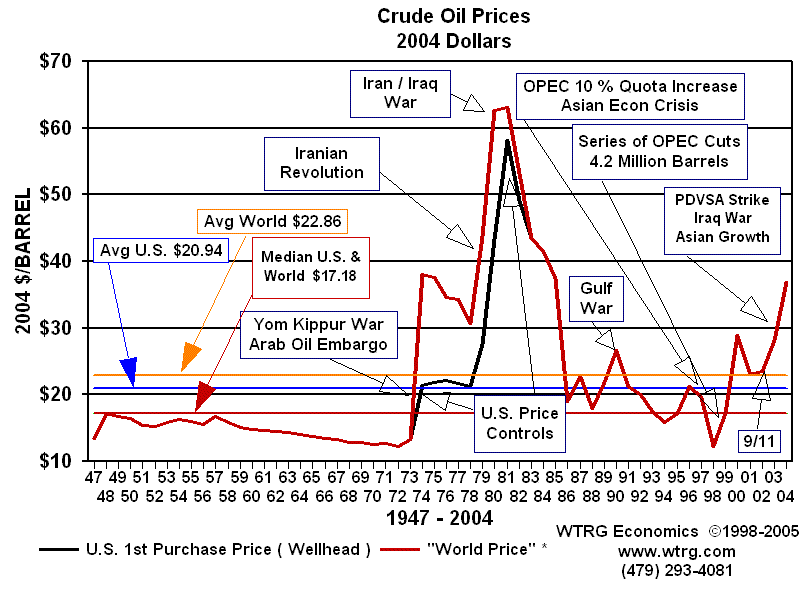
The recent hardships of the manufacturing and auto sectors will likely accelerate the trend seen above (and below), but it should be noted that oil is at (recent) record lows, and though this is unlikely to persist as long as the oil slump in the 80s, it could put a damper on western growth (and the numbers shown before). Troubles with OPEC way even depress prices for longer, which is not a good sign for oil production based economies.

Lastly, on the note of regionalism, I want to make sure that the idea of a coalition (as with all other ideas Mr. Dion has touched) does not disappear just because Mr. Dion's less then in touch tactics have chosen a less then ideal time/method to have a good idea. Now, I'm not advocating a coup, and I'm not saying anything should be done. However, even if the NDP and the Liberals were to agree to stay out of each others battles with the Conservatives, the next election could be very different. For example, take Egmont, PEI. After what should have been considered illegal tactics, the Conservatives managed a 55 vote lead over the Liberals. With 1670 NDP and 626 Green voters in the riding, it doesn't take a genius to see the possibilities. Other ridings of note (from a quick perusal of the results) :

The "ever so close" for the Liberals:
  • Kitchener-Waterloo
  • Kitchener Centre
  • Mississauga-Erindale
  • Oak Ridges-Markham
  • Saint John
  • Egmont
The "with less then half the NDP support" for the Liberals:
  • London West
  • Kenora
  • Essex
  • Miramichi
  • West Nova
The "some reason for the NDP to do this" for the NDP:
  • South Shore-St.Margaret's
  • Saskatoon-Rosetown-Biggar
  • Surrey North
Also of note are: Nunavut (could go any way), and Pontiac (where the Liberals coming off better then the Conservatives for Quebecois could cause a change of hands).

The point is that with enough support moving from one party to the other, BC could turn Orange, and Ontario could turn Red. That doesn't even take into account an upswing in support with a different liberal leader, and any decreased confidence in Harper.

In the end however there are definite reasons why anything like this would be hard, if at all possible. I suspect one of the biggest is that even though Liberals and NDPers tend to fall on similar sides of the issues, they may not always do so for all of the same reasons. Some of the negative reaction to the coalition was likely due to this, though some would likely have been out of surprise, worry, and want for stability. Still, if they could make some simple "play nice" agreement, and sold it to Canadians they could get more seats for less bucks. The risk, of course, is that the Liberals would risk becoming a regional party, with no real claim to power. All of this, in the end is probably the best argument for STV.

So, while we definitely have our differences, I think we need to remember that 141 years ago, it was decided that we are stronger together (though to be fair, the Americans don't want to take our prairies from us in the same way as they used to). Even though we have had separatist movements from day 1, and from across the country, we have always realised the truth in this, over the long term. When some are weak, others are strong. Even though Atlantic Canada has been very "have not", Alberta would be in a larger labour bind without the healthy and educated work force that it provides. And who knows, if wind/water energy goes huge, maybe the reverse will happen someday. We need to look past regionalism to find Canadian solutions that work for the differing political views of this country. Then we need to look past those views to work together to actually move forward when we need to. (Like, maybe, now?)

I'm fairly confident we can do it. If there is anything we are good at, it is dealing with the issue enough so that it doesn't separate us, but we feel uncomfortable enough not to bring it up. And what is more Canadian then awkward silence?


Note:BC-STV is pretty good, as it keeps a good level of regional accountability, which is important for many Canadians. Though I can't say I'm a fan of multi-member ridings, my preference would be to simply have STV in all of our 1 member ridings. It should also be noted that Proportional Representation has been considered by 5 provinces. BC came close on STV, Ontario, and PEINB decided not to hold a referendum on MMPR, and Quebec is still considering.
turned down MMPR handily (no regional accountability),

Sunday, December 7, 2008

So long, farewell, auf wiedersehen, adieu

Since I have an exam tomorrow, just a quick post to share the happy news that Dion is likely on his way out. Three indicators:
  1. Rae and Ignatieff agree that the Liberal party needs a new leader by the time Parliament restarts. Unsurprisingly they can't agree on who this leader should be, but by adopting pretty clearly opposing views of the coalition, they offer substantially different views of where the party should head - towards a coalition (which would be a terrible idea) or towards fighting the Conservatives head-on for better economic stimulus and gearing up for an election (which makes a whole lot more sense at this point.)

  2. LeBlanc is backing out of the leadership race. I'm not sure how much difference this makes, because he had about as high a profile in the media as... well, actually, Dion before he was chosen as leader. Perhaps it is a good thing that LeBlanc is backing out then. Anyway, he's likely supporting Ignatieff.

  3. A new Angus-Reid poll presents a clear alternative between Dion, Rae, and Ignatieff as Liberal leaders in the next election. Per the poll, the Liberals would trail the Conservatives by 42-22 under Dion (holy shit that is low), 41-26 under Rae, and 38-33 under Ignatieff. In the latter case, the Liberals would see the biggest gains in BC, Ontario, and Quebec, which is significant as these are probably the three regions where the Liberals have the best chance of picking up seats (as the Prairies look pretty solidly Conservative and the Maritimes offer few seats that aren't already safely red or entirely blue).
Let's take a moment to see what a huge difference the leadership change could make at this point. I don't want to make too big of a deal of one poll, but seriously, look at this:


One of these parties has a future. The others... do not. Either people really respect Ignatieff's leadership a lot more than Dion's or Rae's, or Canada is tired of the paralysis brought on by Harper and the coalition and are eager to see a leader who isn't associated with either.

CBC offers a decent summary of the Liberal leadership race. It talks of Dion resigning Wednesday - only a week after he and Harper seized control of the airwaves. When did Canadian politics get so busy? Even American media is starting to notice.

At this point, it's looking like Captain Coalition is suffering as the coalition tanks. While I'm still not wholly won over by Ignatieff, it's really reassuring to see the Grits backing away from the coalition a little and reassessing their prospects and priorities - and when Ignatieff is talking about the chances for the Conservatives to be toppled (as opposed to making it sound inevitable) that's a good sign that the Liberals are putting Canada's and the Liberals' futures ahead of Dion's, the Bloc's and the NDP's.

Saturday, December 6, 2008

Wild Wild West

Before I make with the blagging, I'd just like to note that I'm adding this blog to Liblogs, which is some kind of aggregation service for people who like all their commentary to come from people they agree with. I was actually kind of impressed that such a service existed, because previously the only Canadian political blog I'd read was the unquestionably funny but reliably archconservative Filibuster Cartoons. Already, I'm seeing some cool news on Liblogs, including a suggestion that the Liberal leadership race might be moved up. If so, this is an encouraging sign that the Liberals are looking to change course and possibly get ready to fight an election.

Also, I feel it's necessary to respond to Kevin's comment, where he suggested that supporting the budget would be a decision based on political expediency rather than Liberal principles. Perhaps I didn't put enough emphasis on the notion of Conservative concessions, but I would suggest that if the Liberals can work with (or pressure, depending on how adversarial you like your verbs) the Conservatives on delivering a decent economic stimulus plan, then this would be much more in keeping with the strongest Liberal principle - responsible, rational leadership - and would put them in a stronger position for the next election as they could tout their own expertise in solving economic issues and working with other parties in what is most likely going to be a minority Parliament. (Also, it prevents a March election which would most likely give us a majority Conservative Parliament.)

In his last post, Allan touched on Western alienation - the concept that the federal government does not adequately represent the four Western provinces. The coalition is only going to exacerbate this problem, and I'm going to show why this produces a serious electoral challenge for the Liberals. (Throughout this discussion, I'm going to ignore any speculation or rhetoric as to outright separation, by Alberta or any other part of the West. This sort of discussion isn't really grounded in reality, and reflects an attempt by Calgary Conservatives and Toronto Liberals to raise the spectre of an Alberta or Western analogue to the Bloc Quebecois. It is worth noting though that at least one Conservative MP backed separation at one point.)

First, it is essential to point out the precarious electoral position of the Liberals in the four western provinces. Of the seven Liberal seats in the four provinces, every single one had a Conservative canadidate in second place in the most recent election. Moreover, some of those races were really close:A couple of these races were within 1%, and the two big Liberal victories in Vancouver (Quadra and Centre) may prove hard to repeat now that redistricting is likely to carve chunks out of both of these ridings. Ralph Goodale's Wascana riding in Regina looks safe, but Liberals at this point are going to be fighting tooth and nail to keep these seven ridings red.

There are two reasons why the coalition is unquestionably hurting the Liberal's chances in this part of the country.

First, the new coalition seriously reduces the numbers of western MPs participating in government:
In particular, Alberta and Saskatchewan see almost no representation in the coalition, and BC and Manitoba see virtually none outside of urban areas. The Liberals need to step back and reconsider how they can keep going with the coalition and not seriously interfere with future electoral prospects. I'm looking to see at least three of those seven western Liberals in any hypothetical coalition cabinet, as well as an equal number of western NDP, but it remains to be seen whether this is sufficient.

Second, the raison d'ĂȘtre of the coalition - the economy - does not resonate in Western Canada like it does elsewhere. Here are the Conference Board of Canada predictions for economic growth in 2008 and 2009, as released in mid-November:
(Here, red is 2008 and blue is 2009 - sorry for the colours with their unfortunate associations.) As you can see, economic growth out west is healthy, while the rest of Canada is hurting. When Saskatchewan's economy is slated to grow at over 5% this year, I'm hard-pressed to see a strong response from Saskatchewan to a promise to fix a broken economy. From their point of view, it isn't broken.

It's clear that the Liberals have made a grievous miscalculation with the coalition, and now I'm worried that it's going to give us a Conservative majority within a year and a Conservative monopoly between the Coast Mountains and Lake Winnipeg.

Quick, try and find a winner...

So, what is the state of the nation? The coalition is on rockier terrain then ever. Mr. Dion, will likely be forced out. (It feels like kicking a puppy, but it is probably right, if maybe not for all the right reasons.) The coalition looks to be dying, and taking everything it touches with it. Though it was totally legal and everything, it was probably too much too fast, and those involved were likely too different. The PR campaign that may be waged, over the next bit, may change things a little, but probably not. As a result, we likely know already the new leader of the Liberal party. In the end, the party has been suffering since Paul Martin stepped down. Even after the first races, the... lack of closure Mr. Dion brought to the equation (exacerbated by conservative attack ads), followed by the these last few months, through all of it we have basically had lots of waring camps and factions that may look all smiles, but were always looking for weakness. Even though I am not someone who thinks a fresh leader is all the party needs (fresh paint on a car crash comes to mind), a single rallying point would help, and so this coalition distinction might actually be worth it for the party in the end.

That said, especially with the divisive stance of the federal Conservative party (it really is a shame the PC party no longer survives) national unity has definitely been damaged, and that will mean a lot for the political spectrum. On the west (right?) hand we have Conservatives making comparisons to Communist coups, and vowing separation (when they should be wondering what possessed who to think stopping women from suing for pay equity was something that could happen in North America, let alone Canada). On the other (left?) coast (my apologies to Vancouver, Victoria) we have a province that is again being used as a wedge issue.

The map I'm apparently using.

I mean come on, so what if they are Bloc, they are members of parliament, and they represent Canadians. The reason why it was troublesome to include them had more to do with their tendency of running for Prime Minister of Dream Land, and writing their policies accordingly (see also: NDP, no offense). While some NDP (it looks like a much higher percentage of the party compared to the Liberals) seem to be getting rather pissed at this (perceived) power grab on behalf of people they voted for out of principle, the Bloc seems not to have any party revolt. In fact, lots of Quebecois (and others) are seeing this leper treatment our current PM has visited upon them as some curse from the (in his eyes at least) god of Mt. Ottawa as yet another reason why they can not be appreciated in this loose union of cultures that is Canada. Thus, Harper is helping the Bloc. In the end I think that while I don't agree with their political views on Quebec, this level of disrespect is not Canadian at all, and belongs instead with a people wiling to go to war to prevent succession. The Bloc feeds on the (mostly correctly) perceived history of English vs French oppression and disrespect in this country. What do we need to do to quench it? Treat them with some respect. It really is that simple. Actually, most Canadians could use more of that these days.

So where do the parties stand?

NDP: They seem to have hemorrhaged support. This might hurt them where they had there best hopes of truly replacing the Liberals as "other option for PM" party, the west. While activist NDPers might have taken pleasure in the coalition, and the NDP heavy coalition rallies may have helped them a little, most of Canada west of Quebec (Ontario as part of Western Canada?) is not happy with their choice. They have little to lose in Quebec, but dropping the Bloc because they are Bloc is poison in Quebec. The maritimes are split, but most of their NDP ridings are I think unlikely to change any time soon (thought the one in NL is likely temporary anyway).

Liberals: They are even more in dissaray, and the infighting will continue. There can be only one! There is much left to fix, and permanent damage may have been done in the west, where they really need to become a valid option again. Again, the fallout from ending the coalition, should that happen, may hurt them in Quebec.

Bloc: Looking simply to justify their existence by finding a way to contribute in government, they have been handed the biggest gift in a while by Mr. Harper. With this much anti-Bloc (seen by some as anti-Quebec) rhetoric being thrown around, the Bloc may actually be able to start campaigning on separation province wide again.

Conservatives: While western alienation definitely helps them, they might loose Quebec (which would put a big dent in a quest for majority should an election come in the new year). Also, Harper is definitely on some type of shaky ground. If you are a conservative and weren't put off by the budget update, the quick turn around to prevent a fall probably did it for you. I've herd some are talking about replacing him, and while he may have been a great choice at first, he is both too high maintenance and not able to centralize enough to govern in these circumstances. Also, lets face it, it took the opposition parties getting together and doing something that actively alienated their supporters for him to get into majority poll territory. A conservative leader should be able to appeal to and work with the centre if there is to be any hope of a stable Conservative government.

In the end however, the important thing? Well, 70 600 Canadians are out of work. We lost a net of 38 000 good paying manufacturing jobs this month (in actual fact Ontario lost more then that, but other provinces had gains). Where is the help securing credit? It should cost us nothing, and could do lots. Where is some help to stop these losses? Our manufacturing sector has needed help changing since Alberta oil inflation hit our dollar driving us out of the market. Part of me thinks that the lack of assistance has to do with Harper thinking Alberta needs another source of migrant workers other then Atlantic Canada. We need to match the US auto aid package (proportionally of course) adding in strings like "you won't disproportionately cut Canadian jobs" and if possible "you will add production of the new/future energy efficient models here in Canada". These could even be backed up by putting tighter emissions and mileage laws into place forcing the change (and adding to their new market). This would be helping our economy, and our environment.

Of course, with parliament closed little (but not nothing) can be done. So why worry? Calm down, de-stress, get laid.

Friday, December 5, 2008

...means never having to say you're Tory.

Allan, thanks so much for having waded through all of these poll results. The consensus is pretty clear - people are not with the coalition right now, and are really doubtful that the coalition (or anyone in government right now, or that matter) are actually looking out for anyone other than themselves. This is a really scary time, because the jockeying for control has started to take up way too much time and the country is going nowhere fast.

It's time for the Liberals to wake up and realize that the coalition is a bad idea if they want to say with a straight face that they're the ones who know what they're doing to fix the economy. First, a caveat: the Liberals know what they are doing best to fix the economy, and to run the economy well without fixing the deficit. Here is a graph I made during the last election, showing the federal budget surplus/deficit:
Blue parts are Tory governments and red ones are Grits. As is pretty clear, Conservatives correspond to bad times for fiscal management. (That tail down towards deficit at the future end of the graph is based on early-October predictions, and therefore is likely far too optimistic). Brilliant fiscal policies like the GST cut have failed to increase consumption while seriously draining the revenue flow for the government.

However, this new coalition beast is something different entirely - it's not the Liberals calling the shots anymore, but the Liberals backed up by the NDP and the BQ. With their anemic approval ratings, the Liberals know they can't afford an election, so they have to work to appease the free-spending lefties who are used to being third and fourth parties who can call for billions of dollars towards their pet projects and regions with no political cost and no impact on the government's fiscal discipline and restraint. This will obviously be pretty difficult - as Rick Mercer points out,
In theory, a coalition could work. If aliens from outer space were running roughshod over the country, perhaps a Liberal, a socialist and a separatist could put their differences aside and work together to defeat the alien overlords. A global economic crisis, however, is probably not enough for these three wildly divergent visions of Canada to gel.
Being Rick Mercer, he of course puts it better than I had ever hoped to. The coalition is a bad idea, both for the Canadian economy and - as Allan has pointed out with the polls - for the Liberal Party. MPs are starting to realize this, including leadership candidate Ignatieff and theoretical-PM-in-waiting Dion, who's hedging his bets by looking for "monumental change" on the budget in exchange for Liberal support. Everyone is backing away from the edge, and proroguement is giving the Liberals a chance to re-think their strategy.

At this point, it's time for Dion to go. I'm sorry. I liked him, with his geekiness and his technocratic image and promise of rational progressive governance - but this whole coalition deal, and its poor handling (the visuals did look a little like YouTube, when he seized control of the airways earier this week) show that he's just not cut out for the job. At the same time, the Liberals should be working to figure out what they can do to prepare to fight an election. Here's my six-point plan:

  1. Get rid of Dion. He's way too central to the party's image, and he's not doing a great job crafting or sustaining routes to power. Replace him with McCallum or Goodale or someone until the election.

  2. Get out of the coalition. Say it's not working, not in Canadian's interest. Criticize the NDP and the BQ, and say they are difficult to work with. They were only going to demand political pork and ruin the economy anyway.

  3. Support the budget in January. The Conservatives have made concessions and will probably try to make more by way of pandering by the time the budget actually comes out at the end of January. It won't be a lot, but honestly, the Liberals can afford neither the coalition nor an imminent election.

  4. Come up with a decent economic recovery plan, full of specifics for MPs and candidates to point at and say, "look what we, as the Liberal Party, are specifically promising to you".

  5. Make the convention, in May in Vancouver, a big event. Make surprising announcements. Get as many people out there as possible. Raise the media profile of the party.

  6. Get ready for an election in the fall or summer - maybe even as early as the spring, before the leadership convention. This will mean fundraisers, riding events, and lots of work to convince those disaffected by the coalition to come back to the party fold.

This is all assuming, of course, that the Liberals are willing to take action to step back, realize what they're doing, and start focusing on what they can do to fix their party and the country's economy. At this point, none of the parties are acting responsibly, and Parliament is broken. Rick Mercer, one more time:

If this Parliament were a dog, it would be brought out behind the shed and shot. Rabid dogs aren't prorogued, reformed or trusted.

Thursday, December 4, 2008

How about "None of the above"?

Ya, I have been looking at the polls. I was at a pro coalition rally in Van earlier today, and I though it went well, and I know these polls are a few days old but still. They scare me.


They basically show large polarization of Quebec vs the rest of the country (though Atlantic Canada stands out too, as always). It also shows that the Conservatives at about 45% support (was 37.65%), the Liberals at 24% (was 26.26%), the NDP at about 14% (was 18.18%), the Bloc at about 9% (was 9.98%) or about 37-41% in Quebec (was 38.1%), the Greens at 8% (was 6.78%, but they always poll higher then they ever turn out; I, like many believe this is cause non-voters tend to support the greens). Basically, some Liberals, and even more NDP have decided that the Conservatives are a better choice, while all other parties are about the same. Other fun facts: Most Canadians supported the halt to Parliament, Quebecois dislike and blame the Harper Conservatives more then anyone else, though Canada as a whole was fairly split on who to blame. Crucially, only a low percentage of Canadians (~35%) support the coalition, which in English Canada is sadly at lest partially do to the Bloc support (which I think is silly, as working with the Bloc was doing more for unity then what Harper is doing).

That said, many of the problems (as I fell was also true in the last election) were due to the leaders. No matter how you slice it, more then half of Canadians do not want/trust Dion, and don't seem to like Layton much better. That said, even though support seems to be for keeping the Conservatives, 55% of the country think we are on the wrong track, and 47% of Canadians do not trust Harper. If only there were another choice...

The one thing I really do not understand is that 47% of Canadians seem to think the Conservatives are the best choice for the economic crisis. After that budget update? I can't understand that one at all. I'll admit to thinking Dion isn't a very good choice (despite thinking him a great guy), but after that budget update, he really can't do worse than Harper, can he?

Oh well, if things stay like this (which I'm sure they won't, but they will have to really move to change things I suppose) then the opposition would be stupid to bring down the government. Further, more Canadians (56%) would prefer an election to the coalition (bad sign), only 16% actually wanted an election.

So, summary: The opposition, though what they did is in fact legal, democratic, and pretty much necessary under the Westminster style parliamentary system, Canadians do not like what is happening. They overplayed there hand. I suspect it was that they moved too quick and too arrogantly. It would have been better if they had signed their coalition (maybe more as a letter of understanding), and had a letter of support from the Bloc, all basically saying we are not afraid to topple the government, and we will offer to form a coalition in that event, UNLESS you make certain concessions.

The result? Well, assuming no change, the opposition parties are basically unable to vote against the government. This means that Harper will have a de facto majority (like last time, only he will get more ballsy and thus more mean, divisive and destructive. Sadly, he probably won't even be happy with that, he will probably break his own law about election dates AGAIN, and just ask for another go. The one upside to that, is Canadians might get pissed at him for it. However, he could provoke yet another election with Dion and Layton as his opposition, and they likely wouldn't run as a coalition (which might be there only hope in that regard, as they may not be able to recoup their losses) .

Summary: Unless things change, we will have a Harper Conservative majority government. If the economic update is a sign that means no help for anybody, and a quiet dismantling of the rights and assets of Canadians.

If that disquiets you, as it does me, then there are a bunch of things you can do. If you are conservative, campaign for a new leader of the party. Harper does not seem to want to cooperate, and his policies aren't in keeping with those of fiscal conservatives (like myself). If you are not a conservative, get out there and talk to people. Come up with something to get people on board with the coalition, or at least back into the Liberal/NDP fold. Youtube videos? Signs? Protests? Call in shows? Something. I think if more people realized what was going on, things would be at least a little different. While the coalition really doesn't appeal to me (sorry, but I'm not a fan of the NDP personally) I would prefer 1.5 years of stability, with likely good fiscal management, and the separatists under that agreement they made to behave, to a Harper majority (de facto or otherwise).

In the end, I suppose, I'd pick "None of the above".